
Episode 11
Ricky Santo, Part 1
Listen to This Episode
Featured Guests
Episode Summary
In the first of a special two-part episode, hosts Mike Paze and Christana Elliott interview Ricky Santo. Ricky shares his life experiences and the unique path that eventually led him to discover the game of pickleball.
Topics Covered
Episode Transcript
Hey, this is Richie from Casual Dinker Pickleball. I'm here with Pickleballers Next Door. Just letting you know, this year, 2025, everything on my store is 25% off. You can find out at casualdinkerpickleball.com and follow me on Instagram at casualdinkerpickleball. Thank you for tuning in. I'm Greg. I'm Mike. And we are the Pickleballers Next Door. We are for the Joes and not the pros. Your court, our court. Hey, thanks for tuning in to Pickleball Ballers Next Door. Today, we are here with Ricky Santo, and we will be hearing his story, how he got involved with pickleball, all of the stuff that he's gone through in his life journey. So thanks for tuning in to Pickleballers Next Door. How are you doing, Greg? You know, I'm good, man. How are you today? I'm doing really good. Yeah, I came here into work this morning and what I see outside with a net open and playing on 16th Street Mall. Oh, yeah. You know, had to had to give that net a shot and show some people what it's about. With a couple people down on down on 16th Street Mall, just real quick. I love it. Love it. You guys see our video out there. It's pretty funny. They're from Kansas City, Missouri. So they knew all the stuff that that we went to and they absolutely love that char bar. I know we love that char bar. That's what I told them. I was like, we need to go back to that char bar. That place is outstanding. We'd get really big if we were too close to that char bar. I mean, too big. I'm already there. Well, we have a special guest with us today. We do. Ricky Santo. He's involved with the pickleball world here in Denver and expanding out Rocky Mountain Championship. And we're sure happy to have him. He's one of our studio sponsors. So we're super, super happy. Yeah. Colorado Pickleball Association. But we'll let him talk about all this stuff. Yeah. Give us a little lowdown, Ricky. Heck yeah. Well, I hope you're living the dream because good to play this game of pickleball. I live the dream every day and get to work with great guys like Mike and Greg. And I'm honored to be here again next to them to talk some pickleball. Heck yeah. And if you haven't noticed already, Ricky has a little bit of energy. And we've already given one of our drinks and he's already cooled out. But this is Ricky. He's a high energy. Go get her. Love this dude. Well, I'm passionate about pickleball and I'm passionate about people. So when I get the opportunity to do both now and work with great people like Mike and Greg, I'm excited. So I'm honored to be next to you guys. Thank you guys. Amazing. Thank you. We're excited to be part of you. So we'd love to hear some of your back story of where you started and how you got into this. Do you want a long story, the short story, just the pickleball story? You want to break it up? Give us everything, baby. So start out from, I don't know, you're from Florida. So start out there. Perfect. Well, I was born in Gainesville, Florida. Go Gators. Shout out to my dad. He'd love to hear that. Born in Gainesville, Florida. Lived there till I was, I think, three. Then we moved to Orlando, Florida, the home of Mickey Mouse. My mom was an executive at Disney, so I had an opportunity to go there as much as I wanted. It was pretty fun. So life was good. Bring my friends there and have a good time. And then just grew up. I'm an only child. My parents are two passionate people. I have a lot of energy, but they definitely have more than me. I can't imagine this. No, I can't imagine being at Christmas or something. Right. But even more important, they have bigger and more giving hearts than I do. And that's where I try to leave every day. And that's why pickleball has grabbed a hold of me because it connects people and sharing love. Quick question. Yes, sir. How many times have you been kicked out of Disneyland? Never. I've never been to Disneyland. This is Disney World. Disney World. Orlando, Florida. How many times out of Disney World? Never. But I've been there probably, I think one day we did like 27 straight days. Went to Disney World. Wow. That's insane. It's giant though. Time of your life. I was kicked out of Disneyland once. What happened? It wasn't my fault. Yeah. Wow. No, I mean, we'll talk. We'll talk. We'll keep that one off air. Cheers to that. No, but then again, moved to Orlando, Florida when I was four and raised again, my parents are just passionate and compassionate people and was raised like that and try and live my life to the best every day. I was a very competitive instilled sports have been a part of my life since I started walking. Baseball and football are what I played through and through. I went on to play at Dr. Phillips High School in Orlando, Florida and loved every minute of being a part of that. What position in baseball? Center field. I could run really fast and then in football I played quarterback and free safety. You remind me of a Lenny Dykstra. Lenny Dykstra, Lenny D, baby. Nails. Yep, nails. I was pretty fast. That was my forte and then in football again, quarterback and free safety. I love to, you know, had a good arm obviously for baseball and a pretty good athlete, but I'd love to come up and hit people at free safety. So that's what I did. But again, built so many great relationships through sports and athletics and building competition. I mean, I competed everything. If we're drinking a glass of water next to each other, I'm going to beat you and drinking that glass of water. You think so? If you think you can eat more than me, we're going to compete on that triple decker. I'll shout out from last, last episode. But no, I, again, food's a passion of mine too. But besides that, sports are my life. You know, life is going good, great in school, have a track to hopefully play in college athletics, you know, and, and speed bumps come along. So when I'm 16 years old, again, having a great life, my parents and my friends and family, and they're just connectors. The community loves what my parents did, do everything that they're a part of. And I try to do the same and leave, always leave a smile on somebody's face when we meet them. So, and when we leave them, make their day better. That's our goal. It's a good way to be. It's a good way to be. It's how we roll. We love to see you every time. I mean, it's, it's, it just gets the energy going. And again, skipping ahead. That's why pickleball is so great. When do you find somebody who's not smiling when they're playing pickleball? I've met them. I've met them. Met them. I've had a few moments. I've played against them. Yeah. But you can still try and find a way to make them smile. Mike had a moment at the pickle con. He got, we got beat and he had to go pout in the bathroom for like 20 minutes. Whoa! I did, I did. Mike, well thanks for that. I know, I know. There are people that, there are people that don't smile when they play pickleball. Mike, Mike, Mike. I smile most of the time, yeah. Yeah. No, but, but besides that, again, life is going great. Everyone have, have, you know, a good future ahead. Hopefully go to college and potentially play sports. 16 years old. I get my, my, my dream car. Again, I was the only child. So my parents afforded me the, the great opportunity to have a Mercedes 300E, which was my, again, an older one, but it's what I wanted. And my parents made it happen. So again. Was that a nice little two seater? No, it was, it was, it was a four seater. My mom had the SL. So the SL was the small one. So, but again, love, life was good. Get my, get it for my birthday. And you know, you try and push your limits. So one night, a month after my license, I decide to get a little ride. Me and three of my friends, we had a late night. It was after a game Friday night. We played high school. Willie green was on that team. We ended up going on to play at Florida. Go Gators. But it was just cool to have that. I got funny stories about that. But anyways, out late one night, four 30 in the morning, I test the limits of my car with my three guys in it. They put their seatbelts on. I decided not to. So we start going, we drive over to my, pick up my friends, pick them up. We go toilet paper, a house thing to do when you're in high school, went back home. Then four 30 in the morning, we go back to check out the toilet paper, man, we did a good job, you know, admired our work. Nobody had waking up. So we are going back. So I try to test the limits of the car. Start going 50, 60, 70 on a popular violin road in Orlando, Florida, which takes you right to Disney world. So all these things kind of connect going faster, faster, 130 miles an hour. Again, I go black from here, but my mind, but 130 miles an hour hits the median slides across the other side of the road. There's still a chunk of the road missing. If you go back, they repaved it, but you can still see the divot hits the curb starts flipping. So there's two brick walls that meet in a corner and we're basically going right at the corner in the car starts flipping as we're flipping. I fly out of the car 50 feet head headfirst into a wall. The car itself continues flipping the other direction, hits another wall, demolishes the wall, leaves a V in it. The car falls back on its roof. All the guys are hanging there. They wake up after getting concussed. One guy split his head open. The other one broke his collarbone in the front seat because it flipped corner to corner. The other guy was virtually uninjured other than the concussion. He suffered. That's amazing. Yes, thank you. Thank the Lord. So then but they can't find me. They start looking around. They finally locate me. I'm in the corner almost from what they say, crying like an injured puppy dog, like not even being myself. Ambulances come. Firefighters come. I'm airlifted to ORMC and they call my parents on the way home. Are you the parents of Ricky Santo? Yes. Yes. Yes. What's going on again? 430 in the morning. Well, he's been in a serious car accident and we're airlifting him to ORMC in downtown Orlando. My mom starts screaming, is he alive? Is he alive? Well, when the when the when the helicopter took off, he was. That's all they could leave her with. So my parents had to drive their car talking about what happened, not knowing anything. Airlifted to the hospital. They rushed me into emergency surgery, two brain surgeries later, followed by 15 days in a coma, two and a half months inpatient, 18 months outpatient. That was the journey that I went through. And a head injury after going through that is something I would never wish upon my worst enemy. So did you have to learn to walk, talk and do everything again? Every bit of it. So I hurt my I hurt my frontal, my temporal lobe. I have a really cool scar that that kind of I felt it. I have felt it. Oh, wow. Mike has a pretty big divot there. Pretty big divot in my head again. They took out a piece of my skull to relieve the pressure in there. But. Yes, they retaught you everything, how to walk, how to talk, all your basic functional skills, and then the outpatient was the most rigorous. You have to teach other parts of your brain to compensate for the parts that are injured. You must have slept a lot after I was on the recovery road. It was a journey, mentally exhausting, but but gratefully, the second I went from ORMC to Sand Lake Hospital, which was right up the road from our. Revert back, so I get in that accident, I guess, and how how how supported and loved my parents were our family, I get airlifted to the hospital. They're going to do these surgeries 7 a.m. All the kids hear about it because they see that the hole in the wall. We had 250 people there at 7 a.m. They're saying prayers out front of the hospital. They can't even see me, but people come in there for my to support my parents and me on the. That's awesome. That is awesome. I mean, you're loved. I mean, that's awesome. And then and then and then that same morning at school, they said another prayer on the flagpoles. They're like just the community and the support and the love. That's what community is huge. Yeah, it's massive. And I mean, it helps with the recovery and all that stuff. Right. So anyways, Sand Lake Hospital, that's where I was, again, a mile and a half up the road. All the players, all my friends and players and so forth would come drive a mile and a half down the road, come visit me in the hospital when I was going on this journey. So that's the community and support and the love. Again, that's two and a half months of my life. I don't remember. I remember from pictures and video, but it was amazing. That's that's what gets you through. So community, community, community. And that's what's what ties into pickleball. That's what I was. I knew it all community, but as we go on, unfortunately, football was taken away from me at that point with a head injury. I don't think there's any doctor or any organization that would have let me come near that. So football was still my passion, but I was pretty good at baseball, too. So I went back and played in high school, was able to do that, had some great teammates, some great coaches and support to get me through that journey and ended up earning a scholarship. So I went on there, went to play in college. No, I went to junior college in Jacksonville to start. Then I went to Mercer in Macon, Georgia, and I had some repercussions for my head injury. So it was awesome playing at Mercer. Got to play Florida. We did play against Florida. So that was cool. Auburn, Georgia, all these big time schools. I have friends whose daughters play at Mercer. Mercer. Very cool. Macon, Georgia. So I was there for about a semester and then about 11 games. But I had repercussions for my head injury. Again, when you're head injured, you're head injured for the rest of your life. So again, something I would never wish upon anybody in my life. But we're pushing through every day with the love and support of the community around. Community. Community. You still get that stuff today. When you're head injured, you're always head injured. Like that 18 months of outpatient, they taught me how to overcome when I'm having something that is going wrong or something that's not working right. So they teach you those skills to compensate for that. That makes sense. Yeah, for sure. It's got to be hard to live here in Denver, too. Our biometric pressure changes so much here. Heyo! My wife has some situations and blood clots in her brain. I know the storms are coming before everybody else does. Right. It's crazy. And I have a hard time walking upstairs sometimes because I get out of breath. Barometric pressure. Yeah, we'll call it that. But no, anyway, so then finished at University of West Florida. Played five games there. Ended up tearing my labrum. But you know, so baseball was my passion. But I had kind of got burnt out. But one of my best friends growing up, Zach Granke, I lived through his baseball career. He went on to pitch a lot of years in Major League Baseball. Dodgers! He pitched with the Dodgers, drafted by the Royals, played a bunch there. And then my other great friend who played for the Royals, Johnny Damon, who I met while playing in high school. So again, these are just the people that are around you that just build you up to who you are and make you a better person. So then lived my baseball career through Zach. I mean, he'll be a first ballot Hall of Famer. You know, played for a lot of years. And now he's in retirement. So he's not a bad friend to have. No, he's just a good friend. But again, a lot of other neat athletes. The Violas growing up were a huge friend of mine's. The Crowfoots. So the Crowfoots used to live next door to Shaq. So I get to see him walk around the neighborhood all the time, or Nick Anderson up the road, or Johnny Damon lived on the other side. It was just, that's crazy. It was pretty neat. The Crowfoots made a huge impact on my life. And we'll have, there's a way they make a bigger impact down the road that I'll mention. But again, people, all these people were there to support through the head injury. And then as I go on my journey, still staying in touch, just that community feeling. Yeah. So then finish up baseball. I'm done with it. And living in Pensacola, Florida, loved it. Ended up buying a house there. Could have done it for the rest of my life. Hung out on the beach and done the good stuff that you do on the beach for the rest of my life. But I had built three TVs in my wall. My roommate's like, Rick, you know so much about football. You should get into coaching. I'm like, I've never thought of that. But okay. You know, so again, Florida Gator. I've been to 340 games in my Florida Gator game. My parents live and breathe orange and blue. So that's where that passion comes from. We'll give them a pass. Yeah. But so yeah, it was neat growing up in that environment of college football. So I call Coach Kroy. We're watching like, Coach, Coach Kroy is Coach Kroy Crowfoot. So here's where the Crowfoots come involved. Coach Kroy, I want to coach college football. Whoa, whoa, whoa. We should probably start a little lower than that. But he's friends with Urban Meyer, Lou Holtz, Skip Holtz, all these big time coaches. Yeah. Big time college coaches in the past and still today. So reach out and connect with him. He's like, well, let's start in high school. So he connected with my old high school and said, you should come start down here. I went and did it. Again, I graduated with an engineering degree, went for my internship, spent a day there behind the desk. That's not me. I need to be out in the field, meeting people, connecting. So I get that. I took on Coach Kroy's challenge, and I went and got an opportunity to coach high school football. Nice. So I taught math. Loved it. Math is amazing. High school football. I thought I was a good math teacher until I met my wife. We'll get to that in a bit. But I feel like I was a really good math teacher. But coaching football and then becoming the head softball coach and helping with baseball. It was the perfect life. I could have lived it and done it for the rest of my life. This is all in Florida. All in Florida. Yep. In Orlando. But then I get a call. Christmas Eve, excuse me, New Year's, December 30th. Ike Crowfoot calls. Rick, Coach Meyers, we're playing on a golf course right now. We're here. We're on the 15th hole. You got to get here as soon as possible. Ike, I'm in the middle of a meeting, but I'll be there as soon as I can. I'm hustling. I call him. I'm like 15 minutes away. I'm like, Ike, I'm almost there. He goes, Rick, Coach just left. Coach Meyer just left. Coach Urban Meyer. I said, what? My chance to have an opportunity to go work for him. He was just getting back to potentially coaching at Ohio State. And he says, but he wants you at his house tomorrow at 7 30 a.m. In Gainesville, Florida. Done. I'll be there. So I wake up early in the morning in Orlando. Drive an hour and a half up to Gainesville. Go meet Coach. And what an experience to meet a legend like that. That's an opportunity you don't want slipping by. Right. So I pull up to the gate. There's a gate to get in. Michelle answers the phone. You'll learn to come and get to know. She, hey, Ricky. I've never met her in my life. But just the most positive energy. I'm like, oh, this is going to be awesome. I think this is going to be what's going to happen. Go in the gate. Pull in. Let's me in. Get to the door. Go knock. Big intimidating figure in the door. It's Coach Meyer. I'm like, oh, geez. So he opens the door. He's like, hey, you know, like very straight face. Like Coach Meyer. Ricky. Nice to meet you. I'm wearing a pink shirt. Black pants, pink shirt. That's just me. Nothing wrong with it. Hey, Coach. Good to meet you. You know, I'm like excited. And he's like, you know, kind of looks to me a little uniquely. But we go in and talk and he's very serious. And I'm trying to be more serious and confident. But tell about myself is like, okay, well, let me make some calls. He goes away, make some calls, comes back. He's like, nobody's answering. But I really like you. I like your energy. And my best friend, Coach Croy Crowfoot, he vowed us for you. Why don't you move up to Ohio? Come coach me in Ohio State. What? So I said, okay, you know, me being. My house is already sold. New into the college. Again, being community. I was living my back. I moved back and live with my parents. I was the only child. So I was living with my parents, which was awesome. I have no issue with that. I loved every minute. So then again, teaching and coaching was what I want to do for the rest of my life. But now I'm sitting with Coach Meyer. So he says, all right, I'm thinking he's going to ask me to come after the school, after the summer. And he goes again, it was December 30th, December 31st. He goes, how about January 2nd? What? Like in two days, coach? I didn't know how the college football world worked. Oh, no, no, no. How about January 3rd? Oh, so three days. Well, coach, I love it. Let's do it. Shook his hand. Walked out of that meeting. Drove home. Called my parents. Told them. That night, we had a New Year's Eve party at Zach Granke's house. So I went over there and told them. And they were all blown away. Like, wow. So we had all these people. People in the community just always connect. Yeah. So again, tell Zach. He's like, wow, that's so cool. You know, and Emily, his wife, and so forth. And I have to call my principal with the bad news. Hey, Mr. Straczynski. And he was the principal, and I went through my head injury. So we had a really good connection through that. And now I'll be back teaching there. He goes, I'm going to have to resign. He goes, what? Everything OK? I said, well, I have an opportunity to coach it up at Ohio State. He's like, what? He's like, yeah, I met with Urban Meyer today. He offered me an intern position up at Ohio State. He goes, what? He goes, go. He's like, go. What? Why are you calling me? He was over in Europe with a band doing something over there. He goes, go. So I turned in my papers. Drove up on January 2nd. Went up and coached at Ohio State. 2012. Incredible, incredible, incredible. So we went 12-0. Got to see the college experience. How to work with Urban Meyer and an incredible staff and learn how really a business can be run. But it's, again, a lot. You know, 100-hour weeks. Just grinding, doing it. Loved it. Wanted to do it for the rest of my life. But then a year and a half passes. I needed to take a step and try something new. Coach Meyer always said, you know, you got to keep moving. Keep moving. Yeah. Had an opportunity. I was the lowest on the total pool working with O-line. Had an opportunity to come to Colorado State. Never been to Colorado in my life. Always heard good things. But every time somebody would come out here, they'd either come back limping or with a torn ACL. I'm like, why am I going to go out there? So I have a question. How did you get involved with the offensive line? Because, I mean, I don't know. How do they take you seriously? Because you're not like, you're not close to six foot. And they're probably just like freaking monsters. They're all 6'7". So I started working with the defense. Actually, I had an opportunity to work next to Luke Fickle and Mike Vrabel. Luke Fickle was a defense coordinator. Mike Vrabel was the D-line coach. Ever Withers was the safety coach. So I was just going to be an intern for the safeties. And I'm doing that. And I loved it. Awesome to sit in those meetings with them and learn college football. But coach came to me one day. I'm like, coach, what's the... I went to Coach Meyer because they're all like blown away. Again, because of being friends with Coach Crowfoot. Coach kind of took a liking to me. Always kind of had me under his wing. You know, like, I go get to go over his house, go hang out, go help him do this. All the other coaches, these offense coordinators, we haven't even been to Coach's house. So we don't even go have dinner with him. Like, how do you, you know? So I was very lucky, again, because of that relationship. I'm built different. Yeah. But it was, in talking with Coach Meyer, he said, you want to have a chance in college and coaching in college football? He's like, learn from the inside out on the offense. Again, Coach Meyer is an offensive genius, as was the staff. So he said, start with O-Line. So that's how I got transitioned after about a month over to the O-Line. Interesting. Yep. So I got to work with Ed Warner, who became my mentor, my coaching mentor. Learned from him there. It was awesome. Got to work with all five of our starters that year got drafted. So I got to work with the best of the best. And again, still stay in touch with some of them, which is pretty neat. But then after the Ohio State, working with O-Line, incredible. But then had an opportunity to come to Colorado State University when Jim McElwain was the head coach. When I was coaching at Dr. Phillips, we had two great players, Dee Hart and Haseen Clinton-Dix, who went on to play at Alabama. Guess who was offensive coordinator there? Coach McElwain. So I had met Coach McElwain. I was, he remembered my passion and energy. Because like how you hear it now and how I was, that's how I was back then. Same thing. Same thing. But anyways, he remembered that and gave me an opportunity to come here as a graduate assistant at CSU. Best move of my life. I got to come out to Colorado, see these mountains. It stole my heart. So get out here to come have an opportunity to work with a great staff here, make some great friends, and did a great job for two years. Went to our first bowl game in whatever period of time in 2013. Had a bunch of NFL players on that. 2014, again, had a great year. But then again, stuff happens in your life that can sometimes redirect you. So I'm, everything's going good, but I'm having struggle. I'm, again, competing at everything. I started playing racquetball with the coaches. I never played racquetball in my life. I played tennis, but playing racquetball, and I got pretty good. Because I would just push myself to be as good as I could at it. And couldn't breathe playing. This is March 6th. Or this is like February. So February, they're like, Coach, let's go play. He's like, Rick, you're not breathing right. You know, you probably should get that checked out. Oh, I'll be okay. February 14th, we go to hike Horse Tooth here in Colorado. Great landmark. We're hiking it, and I can't breathe walking up it. So I'm like, I probably should go to the doctor. Go to the doctor. Oh, you walk, you talk. You know, you're breathing okay. I don't see any symptoms. Go back to it. So time keeps passing. Time keeps passing. March 6th comes. Again, I'm playing racquetball. I can't breathe. I'm like, I gotta go back to that same doctor on campus. That's the issue. We have a lot of great amenities there. So again, go see him. Again, same doctor. He says, well, we got to figure out what this is. Does this. It's not that. Let me do this. Listen to your heart. Not that. Let's do an x-ray. Does an x-ray. Comes back like, oh, he's like, we probably need to get you scheduled for an appointment with an oncologist. I have no idea what an oncologist is. Never even heard of it. He's like, to get a pet scan. Pet scan. What's that? I don't know what that is, but okay. So it's a couple weeks down the road. Actually, we probably should go right now. Oh, so he's like, go to the ER. So I go to the ER. Walk in there. You know, they give you some medicine in your arm and it's like 70 minutes. And then they put you in the cat scan. Go back and sit in the room. ER doctor walks in. Looks me straight in the face. Says, bad news. You have cancer. Oh my gosh. What? Nobody's ever. What are we talking about? So that started a new journey. So I call coach Bobo, who was the head coach. I got retained on the staff when coach went from coach McElwain to coach Bobo. And I'd known coach Bobo for a month. Called him. They were still at the office. I went and talked to him. Coach, this is what happened. Like he hugged me. We almost like cry in our arms. Him and coach friend who was the offensive coordinator. And I'd only known for a month at that point. That showed me who he truly was and how his heart was into it. Then I call my parents. We call a couple of the coaches. Went over and saw my best friend on staff, Alvis Whitted, who was just an amazing man that had an impact on my life. Played in the NFL for a long time and was once the world's fastest man. The thing I always say about him. He was the fastest man in the world at one point. That's crazy. Yep. But then I call Ike as well. The Crowfoots to let them know. And I call Zach again. The same community, same people. Zach doesn't answer. He's probably on the road. Ike answers. We talk, let him know. Next morning I wake up. I have three missed calls from coach Meyer. We had talked maybe once a month. I'm like, okay, let me see what this is. You know, I got my appointment in two weeks scheduled, you know, just for a consultation to see about this cancer thing. After the ER visit, coach answers, Ricky, what's going on? Coach, I'm living the dream. I'm in, I'm in, I'm in Fort Collins, you know, where him and Shelly, coach Meyer coached at CSU and Shelly loved it. You know, all the places Shelly has told me, I'm going around seeing them, checking out, loving it. He's like, what's the deal? I'm like, coach, I got diagnosed with cancer. He's like, I'm having the CEO and the vice president of the James Cancer Center here in Columbus, Ohio, call you get on the next flight here. I'm like, coach, I have an appointment in two weeks for my kid. I'm good. We'll have a consultation. He's like, take his call. So I had known one of them, one of the, the, the, the C-level employees at the James Center. So James Cancer Center. So I ended up calling back. They're like, Hey, get on the next flight. Come take care of it. So what do I do? I get on that flight, fly back to Columbus, Ohio, land there. CEO picks me up at the airport, 11 PM at night, takes me right into the James Cancer Center. Incredible people meet all the people. They start doing testing, testing. So in that testing that, you know, who knows what it is? Again, I had a consultation in two weeks. They're doing testing right there. Guess what? Bang, bang, bang. One thing leads to another, meet the doctors. Four days later, I start chemo, chemotherapy, ABVD. So I find out I have Hodgkin's lymphoma, which is a cancer that goes all over your body and they treat it with ABVD. So we start that treatment there. A couple of days later, get rolling again. You take the treatment, knocks you down for like two weeks. You're out of it. You sleep 20 hours a day. You talked about sleeping a lot earlier. You sleep for 20 hours a day and you're out of it. Again, all this happened to get this treatment started because of Coach Meyer, that relationship in that community. So then again, going through that had 12 rounds of that scheduled in Columbus, but ended up having six of them. So about 18 weeks. But I have two weeks where I'd be knocked out. Then I'd wake up and be okay. Coach Meyer would let me come out to practice. Let me sit in all the meeting rooms. Let me sit in watching film and stuff. And then he said, and just kept going. And I got, you know, all the coaches I had worked with, they were still there. So it was great to keep building relationships with them. But then went back to Fort Collins, came here, started the other six rounds of the same ABVD. Oh man, once we're done with this, gotta be cancer. Guess what? Go do a PET scan. Cancer is still there. So then we keep going, start a new therapy. Six rounds of another chemo. Get it? Nope. Don't get it. So then they're like, there's a spot by my heart wouldn't go away. So they wanted to do a biopsy. They go in through the right side of my chest because it's over by my heart to get there. As they're getting there, they get their biopsy, but they're coming back and they notice something else different on my kidney. I had another spot, which was not the Hodgkin's. This was called chromophobe, another cancer. Two cancers at the same time, which is a very rare occurrence. But Hey, if you're going to do something, why not do it big? Just like I said, if we're going to compete back to what I said, I'm going to beat you. So with that, that was forced to something that could just remove about a golf ball sized tumor from my kidney. Took that out. But again, excuse me, then had the next rounds of chemo that started. Once we had that biopsy, attacked it. Seven more rounds. Didn't get it. Well, since we can't get this knocked out, we're going to have to give you a stem cell transplant. What? What's a stem cell transplant? So come to find out. They basically take your white blood cells out, pump you with this high level chemo, put your white blood cells back in. But what? So that's all it is. Yeah, but you're going to have to live 60 days in Denver. So I had to move down to Denver 60 days, live down there and in the hospital. You don't get to leave. So this is before COVID, but wearing masks and having this garment on your immune systems. Like, I mean, done. There you go. I mean, systems that absolutely nothing. So when you go out of your room, you have to wear all that. When people come into your room, they have to wear all that. So going through that journey to have now this stem cell transplant in the hospital, I had to give a way to let people know how I was doing or what was going on. So we started making these videos, these dance videos. These are incredible. I wish we could put these on live because how you're at your attitude and what you did was incredible. I mean, you got the whole hospital. This is I was I was searching through his Instagram and I found this stuff and I was like, hey, what is this? So my Instagram at Tricky Santo, T-R-I-C-K-Y-S-A-N-T-O. Tricky Ricky. Tricky Ricky. And I had made this a while back and Greg and Mike told me I need to make an Instagram or start posting. I'm like, I don't post. Since 2018, probably or since 2020. But I'm going to start now because of building these brands that we'll talk about here in a bit. But regarding the we make these videos. So go on my Instagram. Check those out on my Facebook. They're all on there. So every chemo I'd have, we'd make a new one. At first, it started by myself. So I'd send them to, you know, text them to people and do it that way. And I, you know, I there was one that was a what's up doc one that I did that Coach Meyer just laughed and loved. And again, send them to all my friends. But then I said, we got to do this easier. So that's where my first social media came in, sending them out on Facebook, pushing them out to people. See these videos. And they kind of began to hit with just me. But then I added to do it with the nurses. But you know, and then when I'm in this and make some fun dance videos, so fun connecting with the nurses. But then when I'm in this stem cell transplant, there's other people going through the same thing as me. So we'd use it as a motivating factor. And those are the videos. I think you see. It all goes back to it. So that's kind of what that does. So then get out of that stem cell transplant, living there for 60 days, you know, incredible service care. Life is good. Get out. Have 33 rounds of radiation. Wow. And then guess what? Cancer free. Hell yeah. At that point, at that point. So then, you know, but cancer is something that never goes away. It's always in you. But you just, you know, verified that I was cancer free. And now I've still been to this point in day. So that was 2018. It's so about seven years. Cancer free now. That's awesome. That's awesome. But with that, was able to go back into coaching, got into it, loved it, passionate. And then actually, once I beat cancer, I got out of coaching for a little bit of a time because of I needed some time away, you know, with what I had been through that journey. I just needed some time away. So it took about a year. Coach Adazio gets hired. I do him through coach Meyer because they work together at Florida. So again, just community connections. Community invited me to come back on the staff. Loved it. The best time of my life working back at CSU because that's where my best years were in Fort Collins and being a part of something bigger than myself, a bigger community than you could ever imagine. And again, working for first coach Mac, then coach Bobo. And then now coach Adazio was great. Awesome time went to, you know, had some great times. And then coaching transition or COVID hits, excuse me. And I've got what do we do, you know? Yeah. So in that COVID time, I'm like hanging out at the house and I'm living in this community. A great family friend of mine invited me to come live with them because of my cancer journey. And I lived in the basement. The Buckendorf family saved my life. So they were what got me through this journey of the cancer journey. It's a, I can add to that later. Go ahead. Nice. So we're going to continue this next week. Tune in, hear the rest of Ricky's story. It's outstanding. See where he's going. See what, how he's involved with pickleball. He's incredible. So this is a, this is a journey you don't want to miss. Yeah. Thanks for tuning in. We'll see you next week to continue this amazing journey.
Recommended Gear
FAIR WARNING: these links help fund our pickleball habit. Small commission, zero extra cost to you.
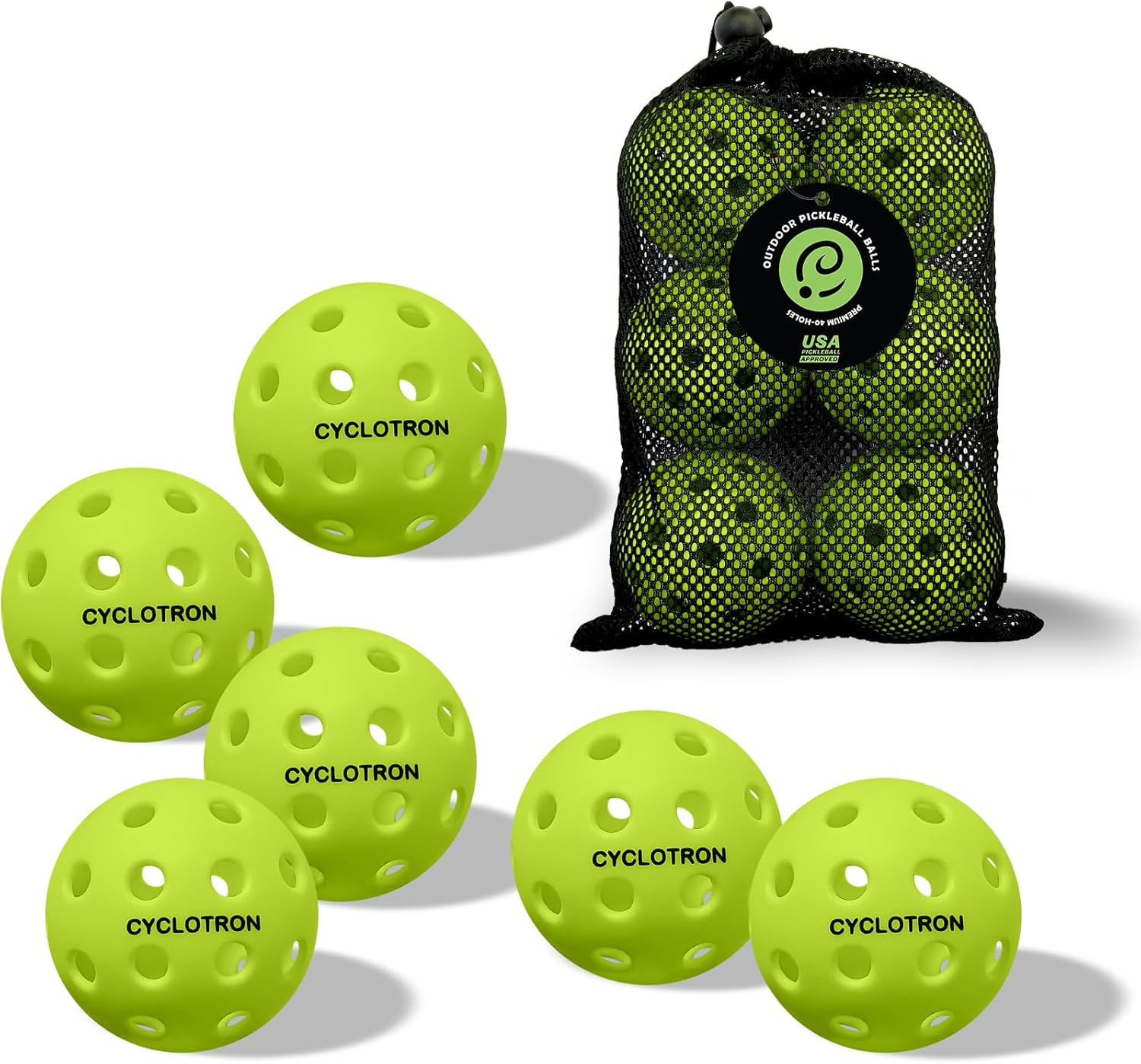
Cyclotron Premium Pickleball Balls 6-Pack with Bag
$11.99
Buy on Amazon →
Best per-ball price on the list. The mesh bag means no loose balls rolling around your trunk.
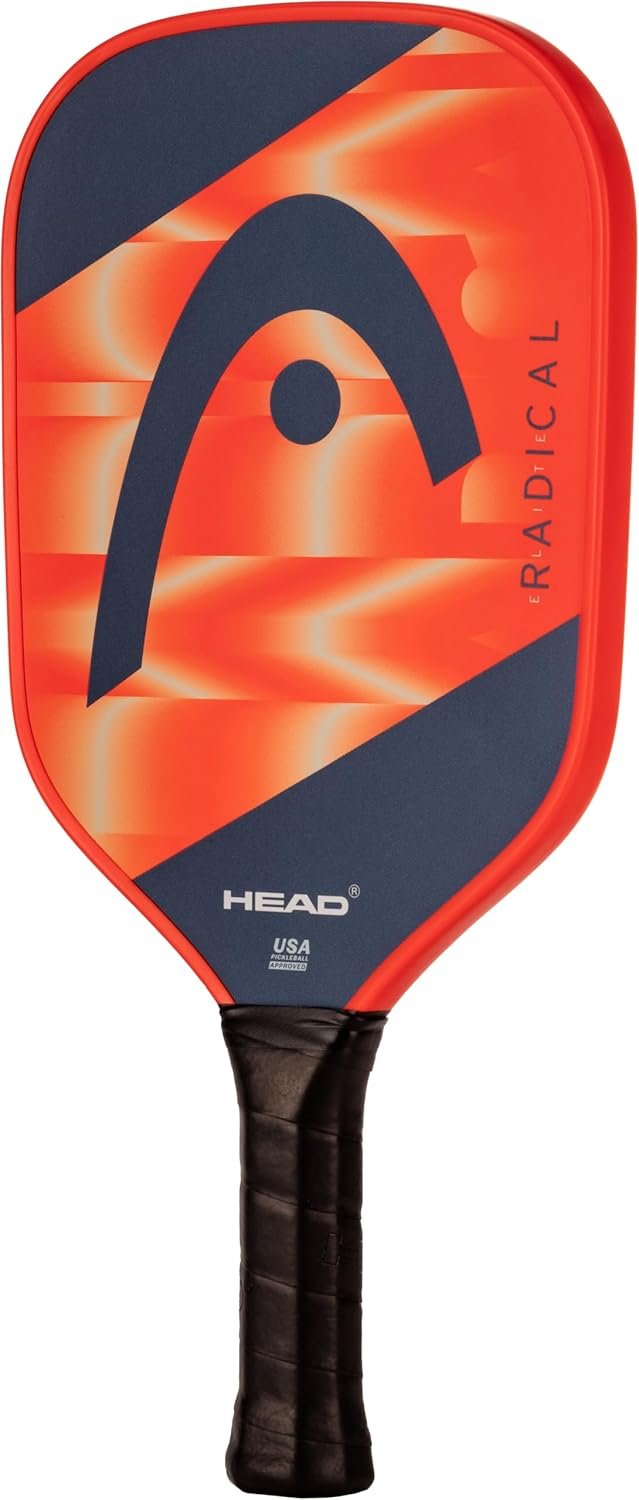
HEAD Radical Elite Pickleball Paddle
$47.73
Buy on Amazon →
The step-up move. For players 20+ hours in who want their own paddle under $50.
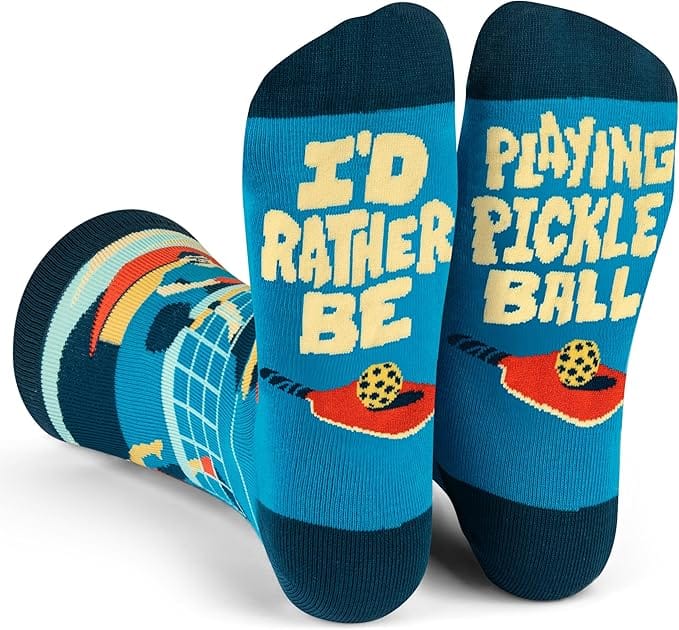
Super Fly Goods Pickleball Sweatbands Set
$16.95
Buy on Amazon →
Amazon's Choice. Towel wristbands + headband kit. Grip feel dies when your hand is wet.
KAVIGOR Pickleball Sling Bag
$21.99
Buy on Amazon →
180 reviews at 4.8 stars. Holds 4 paddles, wet/dry pocket, skin-soft fabric.