
Episode 14
Pickleball Terms
Listen to This Episode
Episode Summary
Join Mike Paze and Greg Ballard as they explore the essential vocabulary of pickleball. This episode breaks down popular terms and jargon, helping players of all levels communicate better on and off the court.
Topics Covered
Episode Transcript
Thank you for tuning in. I'm Greg. I'm Mike. And we are the Pickleballers Next Door. We are for the Joes and not the pros. Your court, our court. Thank you for tuning in to Pickleballers Next Door. I'm Greg. I'm Mike. And we are here today to talk about pickleball terms. Yeah, we've got a lot of people asking us, you know, in our podcast. Even myself, when I started, I remember this, that people would use all these terminology of pickleball. And I was like, just shaking my head. What are you talking about? Yeah, exactly. Where are you? What is this? So, and we've got some creative ones that have come popped up over the time that I've started. They might have been here, but they were those ones I like shook my head again, like I knew what somebody was talking about. Right. How has your day been, Mike? Well, from the last episode, I still sound like Kermit the Frog. You sound better. A little better. I noticed you have an inhaler. Yeah, and I feel a little lightheaded. Maybe there's marijuana in that thing. They have those now. You know, I went to the doctor back yesterday, I went back to the doctor, and you'd never know this, that you could get an illness. So I got an infection in my sinuses, blah, blah, blah. And it just made me really sick. And I've known I've had probably this for a long time, sleep apnea. And I guess when you get older, it can create a lot of problems. You remember Reggie, was it Reggie White for the Green Bay Packers? That's how that guy died. And that scared me yesterday. So anybody, this is kind of a health thing out there. If you're snoring or not getting good rest, which I knew for years that I haven't, but I blamed it like, ah, just a, you know, restless night or whatever. Get a sleep test done. I'm going to be doing one of these sleep tests. They do them right in your home now. But you can die. I mean, it's a scary thing. Some of the things the doctor was telling me yesterday that I guess I've gotten lucky and not met the reaper yet. Not yet. So and I don't want to. So but anyway, I don't blame you. I'm feeling a little better on medicine head. So if I get off a little bit, you probably won't notice because that's my normal. But I'll get back into shape. Get me back over here. But yeah. So I guess, you know, onto our segment here. But how are you? Great. I mean, you didn't ask how you are. It's all about me. You know, it usually is about you. It's OK. I'm good. I played last night from five to seven in an advanced open play. How was it? Actually, it was really good. That was the best advanced open play I think I've played in. Where'd you play at? Epic. Oh, you know what? I find there to be some pretty good players when I go to Epic. I played at the Epic in Littleton, right off of Bowls, right across from Clement Park. Yes. I was actually very pleasantly surprised at how, that was a tongue twister. You see that Mike? Yeah, I see it. I pulled it off though. Yeah, you got it. At how many people were good in this advanced open play, because I played one before and I left after an hour because it was just, it wasn't advanced for sure. Yeah. We're starting to talk a lot about these different subjects and that's another good one. I know it's hard because people start off at a 2-0 and 5-0 and now we go to what? Almost an 8. I mean, I know up there. I don't know. I honestly don't know. Yeah. But I think a lot of us don't know for sure and sometimes we play with a lot of people that we think that are 4-0s or they say they're 4-0s, so you think you're a 4-0, but it's not always the fact. Right. I think we can take that to a whole different podcast. Oh my gosh, it is a whole podcast. We can talk about self-rating and all that stuff. We'll do that at some other time. We will. And we have a specialist for that that really knows rating. Absolutely we do. I've already been thinking about this. So we'll definitely bring that back. But one of the things that we've been getting asked a lot is terminology. As you get into pickleball and any sport, there's always these little quirky little names for things and I think that we listen to our audience and we talk to people out there. Some of them like to know. Even my own wife says she listens to my podcast and she's like, I don't quite know what you're talking about. What's Ernie? Ernie and Bert? Well, yes. Actually, yes. No, there are a lot of terms that maybe some beginners don't know and maybe some people that have been here don't know. I know that when we talk about this stuff just casually and just kind of breeze over people are like, what are you talking about? And so today we're going to go over some of these terms and kind of explain them for you. Yeah, explain them to them. And I think we're going to really be more aware while we're in having these podcasts that if we come across an Ernie or something like that that we're talking about or some special move, we'll try to kind of explain a little bit that way that the people that are getting into this or want to get into this, you kind of start understanding a little bit. Absolutely. So where do we start first? I think we should start on the fun ones first. Okay. I think those are the ones that even for some newer players or even players that are playing a little bit don't quite know. So how about, let's just start with dink. Yeah. So dink, it's not dual income, no kids. It's basically, it's that short, soft shot from kitchen to kitchen. Kitchen to kitchen. And then cross court dinks is a dink that you're shooting cross court to the player, you know, kitty corner to the corner. And then I like your favorite one is the dirty dink that you do to me all the time. Dirty dink. It's just actually putting a shot where it's hard for your opponent to hit back. Yeah. So, but again, when you hear dirty dink, if I heard that I, at first I would have like, what are you talking about? Looking it up in Pornhub. Yeah. It was like, what are you looking at? What do you mean? You're talking dirty to me. Yeah. So like dinking is where you want to play your game, period. That's where you're going to set up your points. That's where you're going to earn your points. So the higher the dink gets, then you can kill the ball. And I don't want to say this too loud out there. I'm going to get in trouble, but I know that the dink is, since we have some new players that come in with a different, they play with that yellow ball that has a little more bounce to it. I like to drive that ball. They don't know what that dink area is. Driving, right? Yeah. Driving. There we go. Here's another turn. Another turn. So when you drive the ball, you're hitting basically a line drive at the person's chest or up the middle. Or what would this be? Your famous move when you're driving it at the person. Body bag. There we go. What's on your license plate? My license plate is body bagger. So here we go. I mean, see how this thing just kind of keeps going. Right. And if you're out on the court, you're like, what are they doing? Do you know what a body bag is? Yes. Mike? I do know because you do it to me all the time. So I know it really well. I actually have a tattoo permanently on my chest. So a body bag is you're at the kitchen line. It's a forehand. It's a backhand. It's whatever. But you hit that person in the body and the ball's dead. So it's your point. Body bag is also kind of, the PPA doesn't like that term. So they use tagging, bagging, body, but never body bag. So that's my favorite thing. I love it. I got five last night. Yeah. And since we're going right into you, what's your next favorite move that you catch people off guard and you're really getting good at it? I don't know. Oh, come on. Tell me. It's a little nasty, isn't it? Oh, the nasty dolphin. Oh, yeah. There we go. There we go. You better be, you'll be, you'll get off into space with him and you're playing and he'll know it. He'll know you're kind of goofing off and you're not paying attention. You're going to get nasty Nelson. And I'm being, let's be honest, it's, it's an evil move. It is an evil move. You do it with, you do it with your friends when you're joking around. You don't do it in serious games. You don't do it in tournaments because people get really pissed off, especially higher level players. I played in the game on, well, I played in the game recently and I looked over to my partner and I said, Hey, do you think she'd get mad if I nasty Nelson or he looked at me and goes, yes. All right. Fair enough. I will not do it. Oh, he, and he likes the challenge. I think he goes after the pros. We were at a grand opening and a pickler and we, we got to play with the pros. I tried to get Kyle. Yeah. He did try to get him. He's fast though. He's a little, he's a fast. He's paying attention. So I think, I think when, uh, when Greg is watching your eyes kind of wander and you're sitting there waiting, he gets you. Yeah. So I don't know. This is me. This is if it's just me or not, but I'm paying attention to everything that's happening on the court. I'm looking at your eyes. I'm looking at your feet. I'm looking at your hands. I'm looking at your body language. That's just me. I just, well, isn't it kind of like baseball, which I know this is different than baseball, but the second they're trying to cheat the base with a pitcher and he looks back and he's trying to catch you when you're in the middle, you know, kind of the same. It's kind of similar. You're just trying to catch people off guard, but I think in the way you do it is in tastefulness and you're having fun. I mean, when I'm getting a gig, only, only when I'm having fun with friends, this, this is not, this is a PG move that you just have fun. We don't recommend this to do to everybody because we know we're going to get a lot of picklers. You'll end up getting into a fight and it's not, it's totally not worth it, but it's fun when you're with your friends and you're all joking around. Yeah. So, but these are some of his moves, so just a couple of them. So anyway, those are the, there's, again, these are things that you wouldn't even think that you'd, if you heard the terminology or, or even, you know, he got your license plate, you wouldn't even, uh, you wouldn't make any sense to you. I actually got stopped on the street one time and the lady was really mad at me and called me a dirt ball and all this other stuff. And she was like, body bagger. That's so disgusting. You're a disgusting human. And I'm like, do you even know what you're talking about? Like we can pull over to the side, let's discuss it and I can explain it to you. But I was like, you know what? I'm sorry. But did she think you were like, like, I don't know, like happy about people being in body bags or a hit man or a, or, um, uh, what is like a mortician? I don't know what she thought because she actually pulled past me, stopped, backed up to tell me all this stuff. Oh my gosh. She was a lunatic. Yeah. There's, there's some out there, but you're in pickleball world. It's awesome. I can't even believe you got that. That was like awesome. It's crazy. Right? Yeah. So, but, uh, sorry, I'm choking again here, but these are some of the, you know, some of the, again, some of the terminology, I mean, we all know some of the other basics, you know, uh, volley, volley, sometimes. So volley, right. Is hitting the ball out of the air, out of the air. Yep. So backhand forehand, that's a volley. And so when we go to the kitchen, which is the no volleys, there you go, right? So you cannot be in the kitchen and hit the ball out of the air. You can be in the kitchen all you want, but you can't hit the ball until it bounces. Right? Yeah. That's the no volley zone, the NVZ, the kitchen, however you want to call it, just don't do it. Don't step in it when you're hitting the ball. Don't hit the ball in the air while you're there. Yeah. And like, I know when we talk to people or help people that are new, you can be in the kitchen all day. You just can't hit the ball if it's not, it doesn't bounce first. Right. I mean, that's honestly super simple. We make it a little harder than what it is. So yeah, definitely. Um, we're also looking at. So like a ground stroke, Mike. Yeah. What is a ground stroke? It's when you hit the ball, effort bounces and yeah, that's, that's a ground stroke. Ground stroke. I mean, so you have a half volley as well, which is not really close to a volley is more. It's closer to a ground stroke. Yeah. It's basically, you're hitting a ball off a short hop. Short hop. That's a half volley. Yeah. But we're not yelling this either. Hey, Greg, my partner, I'm going to do a ground stroke real quick. Half volley, but, but people will say these terms in a conversation and if you don't know, now you do. Yeah. Now you've got a little bit more to go on. Let's do this one. This one can be either sound dirty or not dirty. The golden pickle. Oh, what's the golden pickle here? Golden pickle. So let's talk about the golden pickle. Golden pickle is when you start the game, whoever's serving is that, you know, that zero zero two and starting the game and then they finished the game. Oh yeah. Never. Never. Zero. Yep. They never don't have the serve. He's the only person that, or he or her are the only ones that serve and then they win the game. So you win the game off the first serve. That's a golden pickle. Have you ever had one? I've had one or two out of the time, but again, you know, is probably playing, you know, two you've had. Two, maybe three. I actually had one in a tournament. That's awesome. But if you've had a golden pickle, why don't you DM us and let us know? Yeah. Yeah. I'd love to see who's had golden pickles, but you don't hear the term a lot cause it's, it's a rarity. It's a tough thing. It's not. Think about serving 11 serves in a row and winning every serve. Right. Now you have a good serve. So I, but a lot, but you know, like some of them go out, some of them go short. I mean when I'm on, it's on, it's on, but it's, it's one of those things. Yeah. And then you start getting nervous too, right? Yeah. And then you slow it down. Yeah. And you start changing. You just want it to go in at eight. That's when I start or eight or nine. That's when I start like, okay, I'm going to get this in. I just want to, I want this golden pickle, man. Yeah. Which is awesome. And I wanted to, I wanted to, um, do a real quick shout for, to Dave Lyle, um, Sparky, I think 44 on Instagram. He knows about golden pickles cause I got him on one. We're going to have to give him a call. Hey Dave. How you doing? Sorry, man. But I had to do it. Yep. Happens. So just to keep on this same thing, then we have, if you get pickled now, this doesn't mean that you, you know, wear some hat or something, but this means that now you didn't win in all the serves, but you got shut out. You did not score. You did not score. And it could be a 40 minute game and you still lost 11 nothing. I have had some of those. I mean really great games back and forth. I mean an hour long game and you still get pickled, but it's a good game. And I've had my games where I've just gotten stomped, right? Definitely. So yeah, that's a, so some of, you know, that one that's more common out there. The golden pickle. That was the one that I thought was funny. Here's another good one. You know, like I used to like to shake and bake when I was young, you know, yeah. The pork chops. Pork chops. So good. I know it from Talladega nights. Oh yes. Shake and bake, baby. Yeah. Shake and bake. So, but that's another one that you'll hear people say, you know, and, and, and these aren't like moves. I mean, if you're good and you have a good partner, you kind of know what it is and you're going to know what to do, but I'll let you get a little more detailed with it. So shake and bake is basically you're serving. Yeah. You get the return of serve. You make a nice little third shot or drive and your partner crashes as you hit the ball and that person either pops it up or puts it right into you and you, you get the point. It's just a quick over and out type deal. And a shake and bake. It's a shake and bake. I like it. It's a lot of fun and you probably have done one. You just didn't know you're doing the shake and bake. Yeah. And then we have the, you know, the third shot drop, which we just mentioned in the shake and bake. Basically from the baseline or mid court, you're going to do a nice shot, nice soft drop shot into the kitchen. So basically you're putting it in front of the people's, your opponent's standing at the kitchen line. So they have to let it bounce and you guys can move up to the kitchen. Yeah. And that's, this is one of the most famous probably moves that you'll ever hear about. It was back in, things have changed a little bit, so it's not the move anymore. As much as when I started, it was third shot, third shot, third shot. But it's changed a little bit. Now you got third shot, fourth, third, fifth, seventh, you know, at some point you're going to have to. Yep. And then middle of the court, we just talked about on the third shot drop is basically called the transition zone. The no man's land. No man's land. Yeah. Dead man's land. The, the, the reason you don't want to get caught in this transition zone, this no man's land is your feet are open. So your best shot is to hit at someone's feet and you are wide open for a shot to the feet. Also the angles are way more and the sooner you get to that kitchen line, you cut off those angles. Yeah. Your reaction time in there is just tough. You know, it just depends how that ball's moving. Now you really work hard in the transition zone. So I mean, there are also, it's not bad to get good in the transition zone. No, if you can live in the transition zone, you can almost play anywhere. Yeah. You're a force to be reckoned with. I love, I don't like getting caught there, but I have no issues with the, with the mid court defense. You do really well with it. I struggled with it a little bit. I'm either, I moved too far. I'd start to like everybody, you know, when I was taught in the game, it was like, get to the line, get to the line. And so as time has changed, the ball is being hit harder and staying back farther. I think longer. Right. If you were, you know, as I've, you know, I've only been doing this three years, three and a half going on four years, but it's changed a lot from that three years. Yeah. No, there's no doubt. I agree. Which brings us to the next thing when you're moving forward and you see someone ready to hit the ball, split step. So basically you're moving forward and you're getting ready in an athletic position for that ball to come to you. So instead of continuing to move forward and the ball comes to you and you muff the shot, you see the guy, you see your opponent getting ready to hit the ball, you split your step, you get ready. And if the ball doesn't come to you, you move forward. If the ball comes to you, you're ready for it. Ready to go. Yeah. And then moving while you're hitting the ball is never good. I don't know. I mean, I, there are some, you know, there's a few pros that are really good at it and I've seen some people, but it's just your momentum. I mean, it's, it's physics, right? Right. I mean, I'm moving forward, my paddle moving and a ball coming hard at me. That's not a good, the end result is I'm hoping that they're going to hit it cause it's going to probably be out. And your fundamentals aren't going to be on point when you, um, you don't even know where you're putting it. Yeah. You know, I have seen some of these guys, the, uh, the tennis players that are coming in with the top spin, they just got that damn top spin so good in pickleball that they can sometimes keep it in and hit it hard. But it's, it's, it's not recommended. I wouldn't recommend it to anybody. No. Definitely. Um, yeah, this is, uh, I'm hoping this is helping people. Um, how about a punch volley? You tell me, Mike, what's a punch volley? What's a punch volley? I mean, is it, I'm going to punch the ball? No, no. I'm going to, uh, so I, you know, basically, and if you hear this is your paddle is going to be up in front of you, you're going to hold the balls is going to be driving to you and I'm going to push that ball forward. I'm not, if anything, I might have even moved my paddle. I'm just going to hit that ball. So it's a bunch of, it's pushing back. Yeah. I mean, it's, it's tough. I know we don't, it's like smell a vision, right? We don't know if we were cooking. That's that's more of a block, a block. I'm sorry. That's a block. Oh, look at, see, I've been, I'm off. So like punch volley is you're just punching. You're punching it through. That's it. You're right. I kind of mixed the two cause I kind of do both. You're kind of, you know, you kind of make your choice cause I'll do what's called, you know, do a roll to push roll. So I mean there's, there's a lot of movements in that one move. So it just depends how the ball's receiving coming back at you. Yeah. Your pedal's flat and you're just punching the ball, the ball back through. Yep. So yeah. I mean even that look at, I mean I play all the time, but it's not like you're not hearing these words all the time, but I think it's neat that if you learn these words, then you learn some of the shots that you'll be doing. You know, don't you think that the more you can understand these words, the better your game is going to get. Yeah. And so you can punch volley or you can do a reset reset. That's the number one. I've been, and I've talked to a few pros and out of tournaments, a pro to get to that next four or five and five Oh level is to be able to reset a good ball anytime at anywhere. And resetting is basically, there's a bunch of hard shots going on. You're playing, you know, you're in motion and the next shot is a soft shot into the kitchen. It basically gets everybody back to the line and dinking again. Basically you're resetting the game. That's a reset. Reset. And it's probably the number one artist, the shot that's in the game that you really take some practice. This ball's coming at you. I mean, you've, you've been out there. Some of the drives that come to you. But if you can redrive that ball that's coming at you at a 70 miles an hour and set it back in the kitchen or where you like to put it, that's really good. This is another one that I ever, you hear a lot poacher poacher, you know? Yeah. And it's not a bad thing. It's not a bad thing. It's a, it's part of the game. So basically if you're at the line or you're not at the line, but you're reading a ball and it's going to go into your, your partner's side of the court and you can get there and knock it out. Then you, you go after the ball, you put it away. I'm trying to think here, Mike, I, I love the poach. Yeah. I mean, you, we, I like it too. I mean, I'm basically waiting for you to get a ball that my partner might be in mid court and I just shoot across the front of you. You see me and you switch across. So we're going to go. Yeah. And let's just say you're floating. You floated across court. Yeah. I'm floating across the court and I'm putting it away. Put it. Yeah. Done. I don't know. I'm a big proponent of if you're poaching, that's the last shot. It has to be or else you're kind of screwed because your poor partner could be like, what's he doing? Right. So it's not a, it's not something you discuss and it's like, I'm going to poach this. Yeah. Watch this happen. Yeah. I'm going to be a poacher right now. You know? And the thing about this, when, when this is all happening within seconds, minutes, second and millions of a second, your mind is this stuff's happening. You know? I mean, so it's not like I can look at my partner and give them some kind of sign. It's just going to happen. You just have a good shot, you know, and I know that, uh, that a lot of people like when you watch the pros, they think that they think there's these pros are poaching and you'll watch them play. But the guy that has the forehand will actually take up three quarter, more than three quarters of the court, the left side. He's going to take up more of the court. He's not poaching. Really? That's actually his forehand. So that's not poaching either. Cause you think you'll watch a lot. My wife has watched with me, with the ladies like that guy's just stealing all the balls and I'm like, no, he's not. That's his, he, she's just, she's, her backhand is not going to be as strong as his forehand. Yeah. Which I hate to say that about a pro because most they can do about anything. Right. And then side out. Oh yeah. This is, yeah. Side out is when you're serving the ball, right? You each get a serve on your side and you guys lose the serve and it goes back to the other side. That's a side out. It's in volleyball. It's in, I don't know if it's in tennis. I don't know. Yeah. But the side out is in a lot of sports that involve a court. Yeah. I guess. You get your side ready to go. Maybe I just don't know what I'm talking about, but that's what a side out is, is basically you lose the server and it goes back the other way. And they get ready to go and he repositioned the other side. Right. Yeah. So those terms are really basic. There's not a much of an explanation to them, but if you don't know them and now we're trying to teach you these. So where are we at? Mike? Ernie. Ernie. So we haven't talked about the Ernie at all. And this is a real, I mean, when I first heard about Ernie, I did not understand the Ernie, you know, cause it was like, what are they taught? I didn't get it for a while. Have you ever done one? I've done it. It's really, and it's really, when you get to do one, it's really cool. It is. It really is cool. But there are some rules to it too. So you have to, when you hit their shot, your, your feet and how they land and where you hit the ball is they can be, you know, it's huge. It's huge. So you can't touch the kitchen or the kitchen line. No. Even the part that you don't really ever access that part that goes to the net. So basically an Ernie is someone is dinking back to the corner or you're setting it up. You're dinking to the sideline and they put their head down to dink it back to you. And that's when you make your move. You jump that corner, land out of bounds and hit the ball. Or you hit the ball in midair and land out of bounds as long as you're not touching the kitchen line. It's a, yes. And it's a, it's a great move. What's the one it's like the, it's the Ernie, but you're stepping in, you're just catching that ball right out. It's I guess it's, it's an Ernie, it's a forehand Ernie. You're just, it's a shorter, instead of hitting across down the cross under the court, you're hitting right. The person usually is standing right there. So you give a little drive to that person and it's kind of done. Yeah. And then the Bert is actually a little bit harder to do. And when you see them, it's very impressive. So basically you're on, let's just say you're on the left side of the court and you're reading a ball. You, you run across the court, do an Ernie on that side of the court, the other side of the court. That's called a Bert. If you go from one side of the court to the other side of the court and do an Ernie, it's called a Bert. It's kind of like you're poaching, but you're, you're, you're just going all, you're jumping across the lines. Right. Yeah. But you're going from one end, one side of the court to the other side of the court and doing an Ernie. That's called a Bert. Bert. This is another one that y'all hear bangers, bangers. Yeah. I mean, I get it. I mean, I've, I've been frustrated. I mean, but this game is becoming a faster, harder game. So a banger is a guy or a girl who Terry rarely dinks. They just hit the hell out of the ball all the time. Never stops. I mean, and they're, you know, I hate to say it, but a lot of times they, if they're good at it, they, you gotta, you know, no doubt. And you know how you kill a banger, you reset with a reset. Yeah. We just learned about that. Yeah. And that's, that's, again, if you can reset that banger doesn't know what to do. And if you keep them low and down, they can't bang that ball as hard. So, but that's the one I hear, you know, people always saying yeah, I mean, look at how much I know. Most people know this one is a lob, you know, and I find the lobbying is, you know, depends. It's becoming more and it's surprisingly sometimes I, I'm, I made, I hit, I had such a nice lob yesterday. Oh my God. Yeah. Um, I like to use it when, um, it's a deep serve return and, um, they're crashing to the kitchen line. Oh, they're coming hard and you're there. Momentum's moving and you just give that nice little, you throw a little lob up and they're like, Oh, they hit the break. They have to turn around and go back and get it. Panic. Yeah. And they usually hit a nice shot for you to finish the next shot. If they get it. Oh, definitely. When you lob and they have to run back, you head straight to that kitchen line cause you're ready cause they're going to drive it or they're going to try and I don't know, they're trying, they're trying, they're trying really hard to get it back. And if you're at that kitchen line, you're ready for it and you're just going to put it away. And their momentum is usually still out of whack. So if you just go right back to them, they usually don't, it's, it's over. It's done. Exactly. So that's super good one. Um, I mean, everybody's going to know what a serve is. I hope by now, I mean, yeah, I hope, yeah. Going behind the baseline, cross court as deep as you can. It starts the, starts the point. You know, the one thing that got me in the serve and I challenged, I got really upset about this. So when I was serving and I was playing at a tournament and um, I went to serve and I thought you could not cross the line when you serve. Oh yeah. So, I mean, and this is one that I don't think a lot of people do know. I see it happen both ways. You know what I mean? Yeah. Once your paddle has hit the ball, your feet can go across. Your momentum can take you in. I didn't know that for like two years in. I didn't really, I didn't get that. I was taught that you don't pass that line. So I thought you couldn't serve. So poor me here, I'm helping people here. I was, I was helping at a club and I would just get all over people. Don't you go across that line? Yeah. Well you can bounce the ball in it. You can hit the ball over it. You just cannot step in it when you hit the ball. You can step in it after you hit it. Yeah. Yeah. So, and then the lines, I mean, that themselves, and this is a whole other world, right? You know, that dink line is a line you just don't, you stay off of. Yeah. Even if you're, yeah, your toe, whatever, your hat falls in. It doesn't matter. Your paddle falls. Right. Your shoelace is on it. Right. You're in the kitchen. You're screwed. Yeah. So there's a lot of terms. I mean, there's, I mean, we're not going to get through all of them today, but we're going to try to work really hard as we talk more in about these. One more. I love that. I love this shot as well. The ATP. Oh, yes. Now, this is a fun shot too, and when you get it, it gets you going. It gets you amped. Oh, man. I think it gets you amped more than a nerdy. It does. Absolutely. Absolutely. So basically is when your opponent makes a shot and it bounces wide, you go out and you get it and you hit it around the post. So ATP is around the post. Yes. You hit it around the post into the court to win the point. They're not easy to get, but when you get them, like you just want to walk off the court and be like, I'm done for the day. I did it. I'm done for the day. Yeah. I've had once in a while. I get one or two on a game and it's like, yeah. What's the most you've had in one game? Probably two. I mean, I, I, I struggle with the outside, you know, that outside, you know, depends where it comes. But if they keep hitting it there, I'm going to get it right where you play. Some places it's tough. The courts are just tough. So I have one, only one time have I done this. I ATP'd the serve. Oh, wow. Yeah. That I was like, okay. Wow. Yeah. I ATP'd the serve one time. I've always wanted to do that. I've done it and I'll do it again. Do it again. If I can, I'll do it again. But you, if anybody, if you, you know, it's a fun shot and the fun part about it is, is you can get it a lot when people are dinking to you. They think they're doing this wide dink to you, but it's going to bounce that little bit, just enough out there where you're going to shoot that ball back. Right. Definitely. Definitely. But anyway, there's lots of turns, but we're going to work really hard in the neck and our shows. If we come across the one, we might just stop for a second and mention what it is. Absolutely. We'd also like to give a shout out to Dan. Dan. Dan, he hit me up today after he listened to last week's podcast and basically wanted to know how to get in to a group that plays at a higher level because he's like a three five ish, trying to break into four. Oh, he's having a hard time. Dink Daddy Dan on Instagram. Check them out. Basically what I suggested is just keep asking. I'll play with them when I see them and I have no issues with that and I'm not going to give it. I'm not going to take it easy on him because I don't think that's what he wants. He just wants the opportunity. He wants the opportunity. We all do. This has been my number one pet peeve, especially I played with when I got in. I happen to meet a lot of my players that I, when I started were five O's four or five and up and they would not, you know, they would drill with me once in a while. They would do stuff and I would literally sit in the outside on the fence watching them. Yeah. And I mean, it's just, it is frustrating. I mean, and I get it. I get you want to play a good game. I mean, you know, I know Greg over here, he doesn't play with me as much, but I, it's more me. I get him, I get frustrated, but I like to blame him. He does. He does. But I'm not the one walking off the court, pouting, pouting like a baby. But I Dan, that is awesome. We definitely want to get with you, get you a shirt. We want to play with you and we have a lot of connections. So if we can, we got some great guys, some other partners, some other people that are in our, in our, in our powerhouse here that we'd love to get some turn, some stuff going with you. Yeah. So hit us up next time. You know, it's sunny out or whatever, and you want to go play, man, we'll, we'll try and figure something out. Yeah. We'd love to. And we appreciate you. This is how we're going to make things better for other players is responding. We're going to be able to do it. Absolutely. So if you have questions, you want to hear about something, you want us to touch on a subject, DM us on Instagram, a pickle ballers next door, or email us, Greg at pickleballersnextdoor.com or Mike at pickleballersnextdoor.com. And we are pretty, pretty responsive. So absolutely. Give us a shout and you know, who knows what's going to happen. I know this wasn't as fun as the most of our episodes, how great we are. I mean, there we go. But people have asked this. So if people ask things, we're going to try to, to, to do that. We had several requests to kind of mention some of what the different, uh, to go over the terms. Yeah. And we didn't get through all of them, but again, I, uh, if there's a term that you don't know what it is and we haven't covered it, email us, DM us on Instagram and we will get back to you a hundred percent. We might even address it in the next podcast. Absolutely. And if you need something or there's something you'd like us to talk to the public about, let us know. We'll bring it up. Thanks for tuning in. Thank you. Until next week. I'm Mike. I'm Greg. Have a great week. See ya. See you later. Wanted to give a special thanks to Pickle for the People for supporting our podcast. Pickle for the People is a Denver based paddle company and they specialize in a low carbon footprint. They also have a buyback program. Check them out at pickleforthepeople.com. Thanks for listening. We'll see you next week.
Recommended Gear
FAIR WARNING: these links help fund our pickleball habit. Small commission, zero extra cost to you.
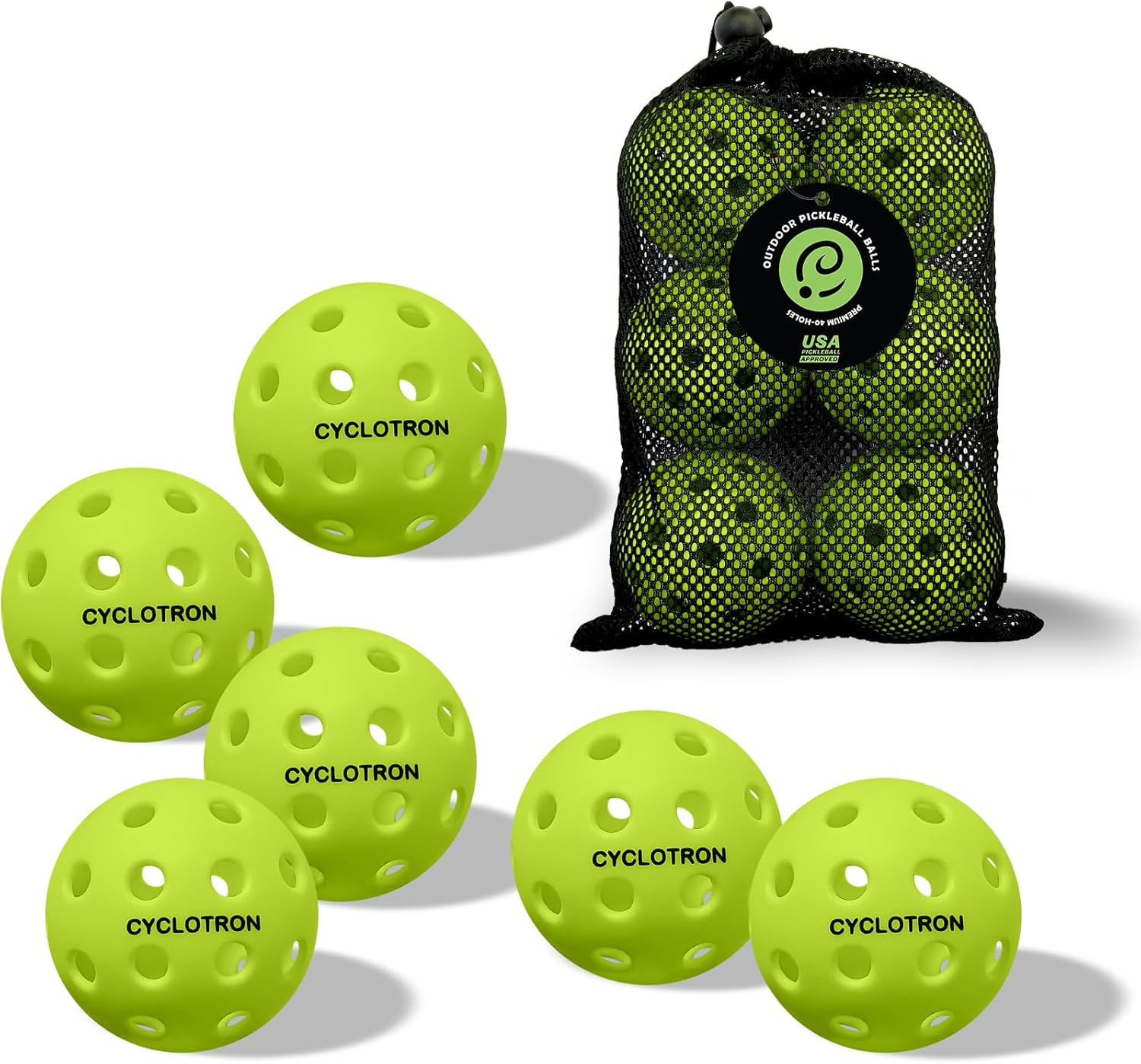
Cyclotron Premium Pickleball Balls 6-Pack with Bag
$11.99
Buy on Amazon →
Best per-ball price on the list. The mesh bag means no loose balls rolling around your trunk.
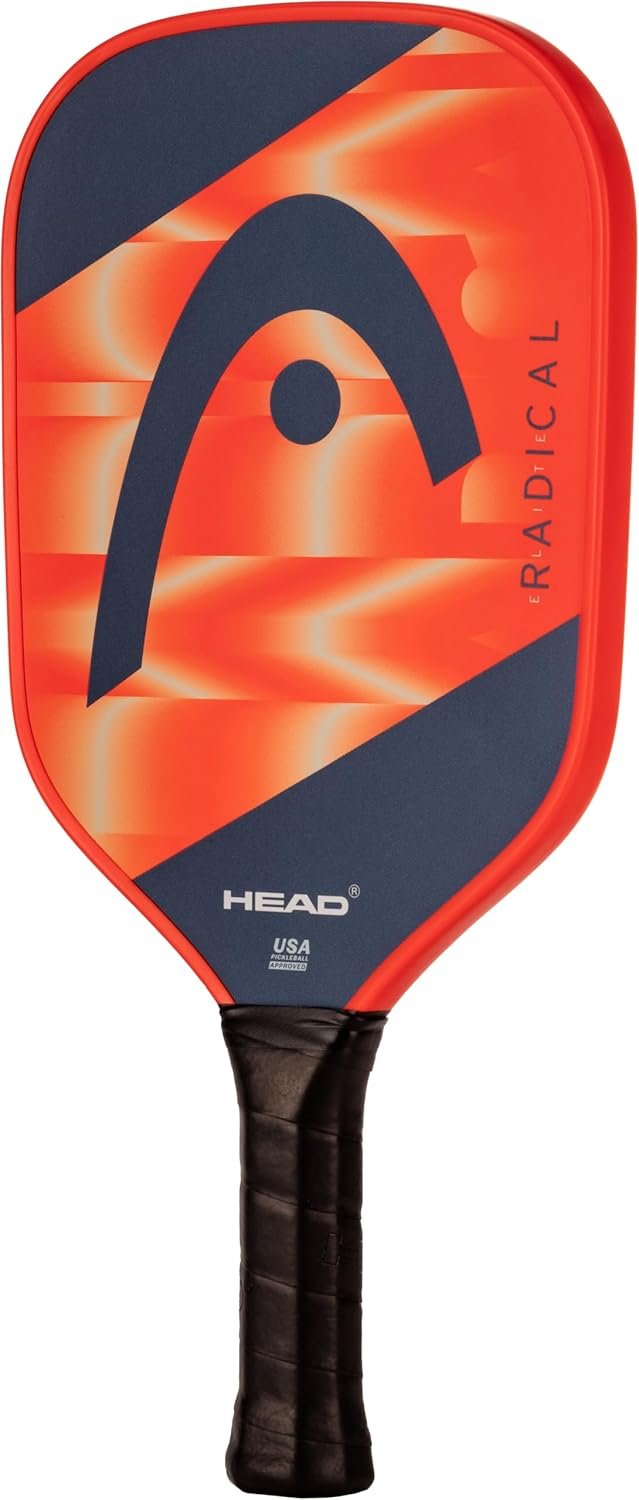
HEAD Radical Elite Pickleball Paddle
$47.73
Buy on Amazon →
The step-up move. For players 20+ hours in who want their own paddle under $50.
Super Fly Goods Pickleball Sweatbands Set
$16.95
Buy on Amazon →
Amazon's Choice. Towel wristbands + headband kit. Grip feel dies when your hand is wet.
KAVIGOR Pickleball Sling Bag
$21.99
Buy on Amazon →
180 reviews at 4.8 stars. Holds 4 paddles, wet/dry pocket, skin-soft fabric.